Online vs. In-Person Higher Education 2026: Costs & Outcomes
Anúncios
Comparing online vs. in-person higher education in 2026 involves a critical analysis of evolving costs, varied learning environments, and distinct career outcomes, shaping the future of academic pursuits.
Choosing between online and in-person higher education is a pivotal decision for aspiring students and their families in 2026. The landscape of academia has been dramatically reshaped, making a detailed analysis of online vs. in-person higher education more crucial than ever. This comprehensive guide will delve into the multifaceted aspects of both learning models, examining everything from financial implications to long-term career prospects, to help prospective students make an informed choice that aligns with their personal and professional goals.
The Evolving Landscape of Higher Education Costs
The financial burden of higher education remains a primary concern for many. In 2026, the cost structures for online and in-person programs continue to diverge, influenced by technological advancements, institutional policies, and economic pressures. Understanding these nuances is essential for effective financial planning.
Tuition Fees: A Direct Comparison
While often perceived as cheaper, online tuition isn’t always significantly lower than its in-person counterpart. Many institutions charge similar per-credit-hour rates, regardless of delivery method. However, the absence of certain fees associated with campus life can lead to overall savings.
Anúncios
- Online Programs: Often exclude facility fees, recreation fees, and some administrative charges.
- In-Person Programs: Include a wider array of mandatory fees for campus services, athletics, and student activities.
- State vs. Out-of-State: Online programs can sometimes offer in-state tuition rates to out-of-state residents, a significant cost advantage.
Hidden Costs and Savings
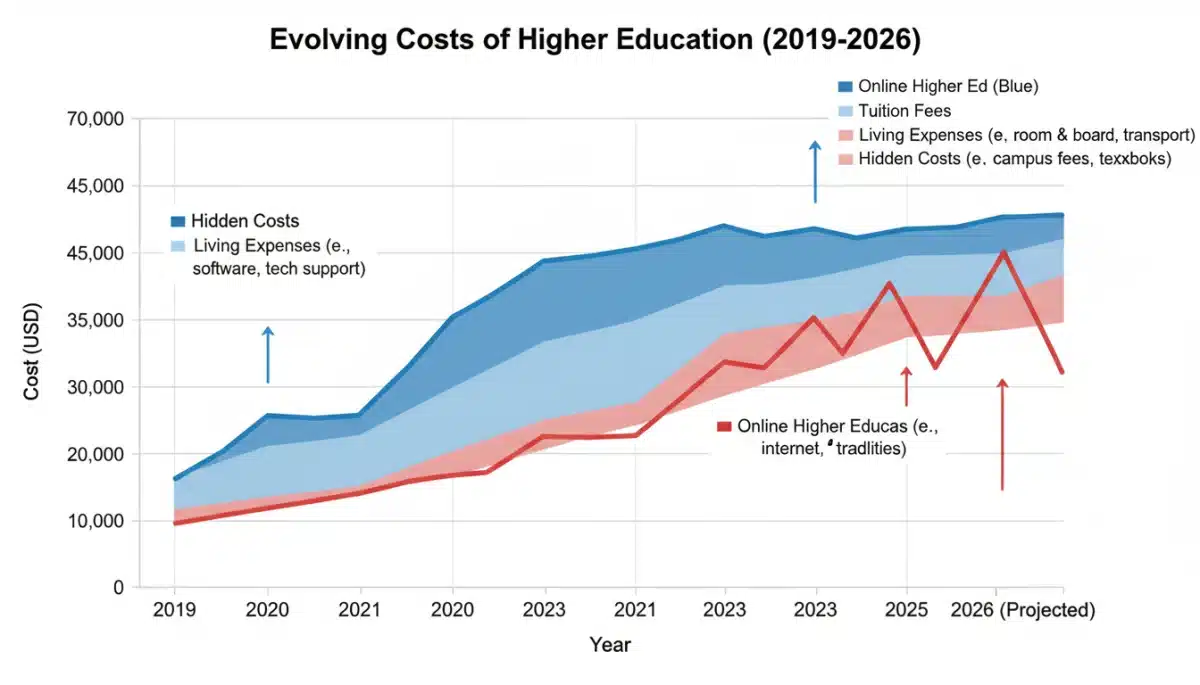
Beyond tuition, a myriad of other expenses contribute to the total cost of higher education. Online students often save substantially on living expenses, transportation, and textbooks, while in-person students incur costs related to housing, meal plans, and daily commuting.
For example, a student living on campus will pay for dorms, utilities, and potentially a meal plan, which can easily add tens of thousands of dollars per year. Online students, however, can live at home or choose more affordable off-campus housing, dramatically reducing their overall expenditure. This flexibility is a major draw for many seeking to minimize debt.
Anúncios

Academic Engagement and Learning Environments
The way students interact with course material, instructors, and peers varies significantly between online and in-person settings. Each environment offers unique advantages and disadvantages that cater to different learning styles and preferences.
The Structure of Learning
In-person classes typically follow a synchronous schedule with fixed lecture times and direct, immediate interaction. Online learning, conversely, often offers more flexibility, with both synchronous (live virtual classes) and asynchronous (self-paced modules) components.
- In-Person: Structured daily or weekly schedules, immediate Q&A with professors, hands-on lab opportunities.
- Online: Self-paced learning, recorded lectures, discussion forums, virtual office hours, often requiring strong self-discipline.
- Hybrid Models: A growing trend combining elements of both, offering flexibility with some face-to-face interaction.
Instructor and Peer Interaction
Direct interaction with professors and classmates is a cornerstone of the traditional college experience. In-person settings foster spontaneous discussions, networking opportunities, and a sense of community. Online platforms, while increasingly sophisticated, require intentional effort to replicate this level of engagement.
Many online programs utilize video conferencing, collaborative documents, and dedicated communication channels to facilitate interaction. However, the depth and immediacy of these interactions can sometimes differ from face-to-face encounters. The success of online engagement often depends on the student’s proactivity and the instructor’s pedagogical approach.
Social Development and Campus Life
Beyond academics, higher education plays a crucial role in personal and social development. The campus environment traditionally offers a rich tapestry of experiences that contribute to a student’s holistic growth, which online learning struggles to fully replicate.
Building a Community
In-person universities are hubs of social activity, offering a wide array of clubs, organizations, sports, and cultural events. These opportunities are vital for networking, building friendships, and developing leadership skills. The residential experience, for those who choose it, further enhances this sense of community.
Online students, while gaining flexibility, might miss out on these traditional campus experiences. Institutions are, however, developing virtual communities, online clubs, and digital events to foster a sense of belonging among their remote learners. These efforts aim to bridge the social gap, but the experience remains distinct.
Personal Growth and Independence
Living away from home and navigating campus life often cultivates independence, problem-solving skills, and resilience. Students learn to manage their time, budget, and responsibilities in a new environment. While online students also develop independence, particularly in self-directed learning, the challenges and growth opportunities differ.
The transition to college life, whether online or in-person, is a significant milestone. In-person students often benefit from readily available support services like counseling, career centers, and academic advising directly on campus. Online students rely on virtual access to these resources, which requires a different approach to engagement.
Career Outcomes and Employability Post-Graduation
Ultimately, a key objective of higher education is to enhance career prospects. The perception of online versus in-person degrees by employers, as well as the practical skills gained, can influence post-graduation success.
Employer Perception in 2026
In 2026, the stigma once associated with online degrees has largely diminished, especially post-pandemic. Employers are increasingly focused on skills, experience, and the reputation of the awarding institution, rather than solely on the mode of delivery. A degree from a reputable university, whether earned online or in-person, holds significant weight.
- Skill-Based Hiring: Focus on demonstrable skills and competencies is paramount.
- Institutional Reputation: The prestige of the university remains a strong factor, regardless of program format.
- Networking: Both formats offer networking opportunities, though in-person interactions can be more organic.
Networking and Professional Development
In-person settings naturally facilitate networking through career fairs, alumni events, and direct interactions with faculty and guest speakers. These connections can be invaluable for internships and job placement. Online programs, however, have evolved to offer robust virtual networking events, professional development workshops, and strong alumni communities accessible remotely.
The key for online students is active participation in these virtual opportunities. Leveraging platforms like LinkedIn, engaging in online professional groups, and attending virtual conferences are crucial for building a professional network comparable to that of their in-person counterparts. The onus is often on the online student to seek out and maximize these resources.
Flexibility and Accessibility: A Modern Imperative
The primary advantage of online education lies in its unparalleled flexibility and accessibility, opening doors to higher education for a diverse range of students who might otherwise be excluded.
Balancing Life and Learning
Online programs are ideal for working professionals, parents, military personnel, and individuals with geographical limitations. The ability to access course materials and complete assignments on a flexible schedule allows students to balance their academic pursuits with other significant life responsibilities.
This flexibility can reduce stress and burnout, leading to higher retention rates for certain demographics. In contrast, in-person programs demand a fixed schedule and often require relocation, which can be prohibitive for many. The rise of asynchronous learning modules has further enhanced this flexibility, allowing students to learn at their own pace.
Geographic and Physical Barriers
For students in remote areas, those with disabilities, or individuals unable to relocate, online education removes significant barriers to accessing quality higher education. It democratizes access, allowing students to pursue degrees from institutions across the country, or even globally, without leaving their homes.
Furthermore, online learning environments can be customized to accommodate various learning needs and accessibility requirements, often more readily than physical classrooms. This inclusive approach ensures that a wider range of students can pursue their educational goals, fostering a more diverse and equitable academic landscape.
The Future Outlook: Hybrid Models and Personalized Learning
As we look towards the future of higher education beyond 2026, hybrid models and personalized learning experiences are poised to become even more prevalent, blending the best aspects of both online and in-person modalities.
Emergence of Blended Learning
The trend towards blended learning, which combines face-to-face instruction with online components, is gaining momentum. This approach offers students the flexibility of online learning while retaining the benefits of direct interaction and campus resources. It allows institutions to optimize their resources and deliver education in a more adaptable format.
- Optimized Engagement: Lectures online, discussions and labs in-person.
- Resource Efficiency: Better utilization of physical campus spaces and digital tools.
- Student Choice: Greater autonomy for students to tailor their learning experience.
Personalized Educational Pathways
Technological advancements, particularly in AI and data analytics, are enabling more personalized learning experiences. Both online and in-person programs are leveraging these tools to adapt content, pace, and assessment methods to individual student needs and learning styles. This could lead to more effective and efficient learning outcomes.
The future of higher education is likely to be less about a rigid choice between online or in-person, and more about a spectrum of options that cater to diverse student populations and their evolving needs. Institutions will continue to innovate, offering dynamic models that prioritize student success and career readiness in a rapidly changing world.
| Key Aspect | Description |
|---|---|
| Cost Efficiency | Online often reduces living and transportation costs, despite similar tuition per credit hour. |
| Learning Flexibility | Online offers greater scheduling flexibility; in-person provides structured, synchronous learning. |
| Social Engagement | In-person excels in direct social and community building; online requires intentional virtual engagement. |
| Career Perception | Employer focus is shifting to skills and institution reputation, reducing online degree stigma. |
Frequently Asked Questions About Higher Education in 2026
Yes, in 2026, employer perception of online degrees has significantly improved. Most employers now prioritize the skills, experience, and reputation of the awarding institution over the specific mode of delivery. A strong academic record and practical experience are key.
While tuition per credit hour can be similar, online education typically offers significant savings on living expenses, transportation, and campus fees. In-person education includes costs for housing, meal plans, and a wider range of mandatory campus services, often leading to a higher overall cost.
In-person students benefit from direct campus life, clubs, and spontaneous interactions. Online students need to actively seek out virtual communities, online clubs, and digital networking events to foster social connections, which can be different but still meaningful.
Yes, hybrid learning, which combines online coursework with in-person components, is rapidly gaining popularity. This model offers a flexible balance, allowing students to benefit from both self-paced learning and direct interaction, optimizing engagement and resource use for many institutions.
Neither model is inherently ‘better’ for career outcomes. Success largely depends on the individual’s proactive engagement, skill acquisition, networking efforts, and the quality of the institution. Both online and in-person degrees can lead to successful careers if utilized effectively.
Conclusion
The decision between online and in-person higher education in 2026 is a complex one, influenced by individual circumstances, financial considerations, and personal learning preferences. While in-person learning offers a traditional campus experience and direct social engagement, online education provides unparalleled flexibility, accessibility, and often significant cost savings. Both models have evolved to offer robust academic programs and valuable career preparation. The future points towards a more integrated landscape, with hybrid models and personalized learning pathways becoming increasingly common. Ultimately, the best choice depends on a student’s unique needs, goals, and ability to thrive within a particular learning environment, underscoring the importance of careful research and self-assessment.
